UNCG historians share ‘Limits of Freedom’ exhibit
Apr 1, 2026Rockingham Community College hosted a public program Monday featuring UNC Greensboro public history faculty and graduate researchers who helped create Limits of Freedom, a 12-panel traveling exhibit examining the experiences of Black residents in Rockingham and Guilford counties from the Revolutionary era through the early 20th century.
Assistant Professor Dr. David McKenzie introduced the project and the two alumni who led much of the research and writing: Jada Denny, a graduate of Rockingham Early College High School, and Megan Mieure, both recent recipients of UNCG master’s degrees in public history.
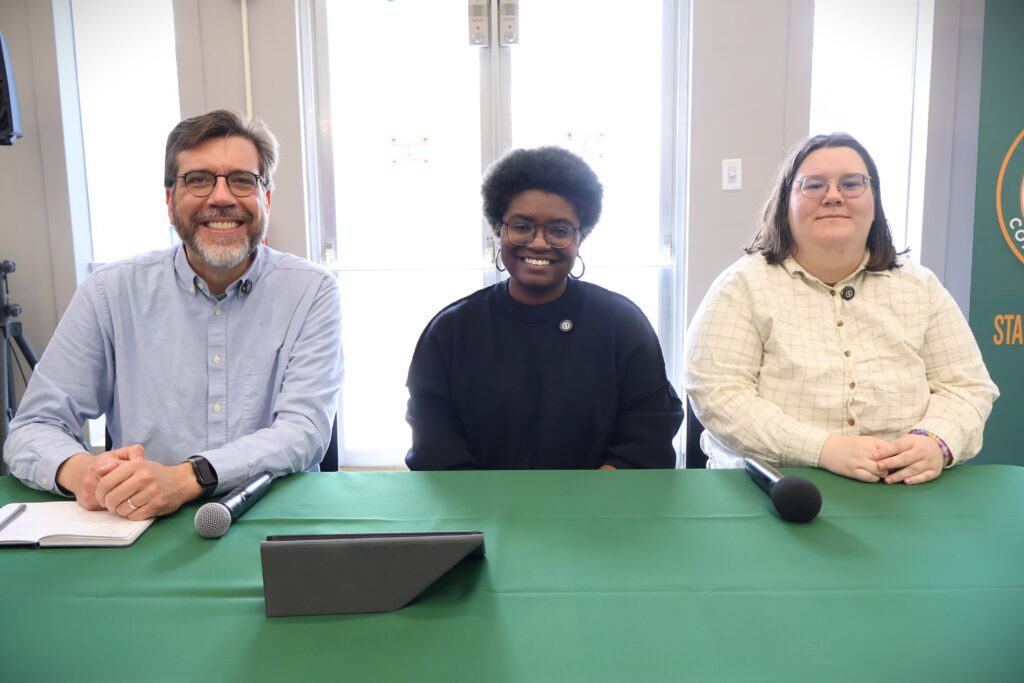
The exhibit was developed as part of the America 250 initiative and highlights lesser-known dimensions of Black life in the region, including industrial labor, movement along the Dan River, and the preservation of family histories across generations.
Denny said her research into Rockingham County’s past reshaped her view of her own hometown.
“Growing up, I thought nothing important ever happened here,” she said. “Then you get into the archives and realize how much of our history has been overlooked.”
One of her focus areas was the role of bateaux – long, shallow boats that moved goods along the Dan River. Many enslaved men worked on these vessels, and although they remained under bondage, their movement across counties provided rare opportunities for contact, communication, and limited autonomy.
Mieure concentrated on the exhibit’s later sections, including a series of 1930’s essays written by students at the former Jonesboro School in Guilford County. The students had interviewed older relatives about their memories of enslavement.
“These essays tell us not just what people lived through, but how families chose to remember it,” she said. “They were honest about the violence, but they also preserved stories of resilience, faith, and community.”
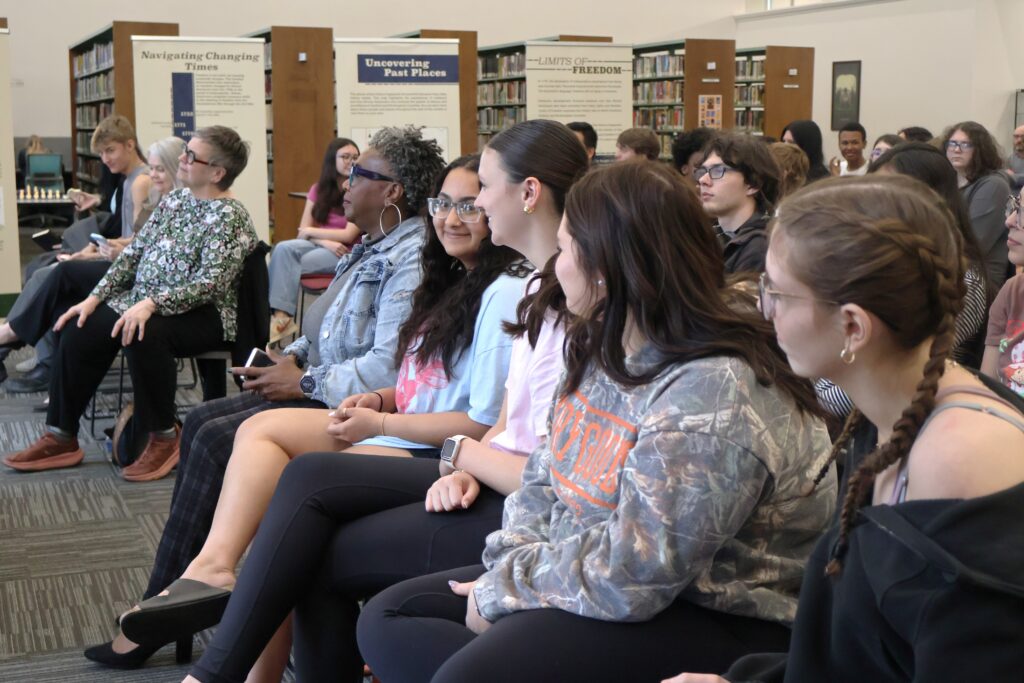
UNCG historian Dr. Lisa Tolbert added wider context, and said that enslavement in the Piedmont differed from county to county. Rockingham County included several large plantations – some populated by more than 100 enslaved people – while Guilford County saw more enslaved labor in towns, industries, and transportation networks.
“It was a flexible, adaptable system,” Tolbert said. “This exhibit captures that complexity.”
Audience members also asked about the project’s origins. Denny and Mieure explained that the effort began as a hands-on grant writing assignment and grew into a full research, curation, and public engagement initiative. Survey data from local residents helped shape the exhibit’s focus on personal stories and community memory.
RCC Library Director Blaine Henderson closed the program by encouraging visitors to explore the college’s own historical collections and to continue engaging with the region’s past.
The Limits of Freedom exhibit will remain on display at RCC before continuing its tour to additional community sites.
